
NOCO Healthcare
Pelvic Floor Therapy | Fort Collins
Non-surgical pelvic floor therapy for Fort Collins women, using FDA-cleared V-Tone technology. No surgery. No downtime. No lectures about doing more kegels.
Pelvic floor therapy in Fort Collins for women who are tired of just coping
Pelvic floor therapy in Fort Collins is what most women start searching for on the day a small leak stops feeling small. A sneeze, a laugh, a jumping jack in a class you used to love, and suddenly you are mapping your day around where the bathrooms are. NOCO Healthcare treats this every single week, and the first thing worth saying is that it is common, it is not a personal failing, and in most cases it responds to treatment.
Our women’s clinic sits in Greeley, about a 30 minute drive from Fort Collins, and a steady share of our pelvic floor patients make that drive from Fort Collins, Timnath, Wellington, Loveland, and Windsor. They come because pelvic floor care here is delivered inside a full medical practice by providers who already handle women’s health, hormones, and primary care, so nothing gets treated in isolation.
This page covers what pelvic floor therapy is, the symptoms it addresses, what happens after pregnancy and during menopause, and how the V-Tone system we use actually works. If you would rather talk it through than read about it, call (970) 888-0399 and ask for a pelvic floor consultation.
Pelvic Floor Therapy in Fort Collins: The Short Version
- Non-surgical. V-Tone uses electrical muscle stimulation to strengthen the pelvic floor. No incisions, no anesthesia, no recovery time.
- Built for the symptoms women actually report. Bladder leaks, urgency, pelvic pressure, postpartum weakness, and discomfort during intimacy.
- A 30 minute drive from Fort Collins. Our women's clinic is at 1130 38th Ave STE A in Greeley, open Monday to Friday, 8 a.m. to 6 p.m.
- Evaluated by a provider first. Pelvic symptoms have more than one cause. You are examined before any treatment begins.
- Insurance verified before you commit. Coverage varies by plan. We check your benefits, quote self-pay up front, and offer payment plans.
A real person at our Greeley front desk answers. No phone tree, no directory.

What pelvic floor therapy actually is
Your pelvic floor is a sling of muscles running from your pubic bone to your tailbone. It holds up your bladder, uterus, and bowel, it controls when you release urine and stool, and it plays a part in core stability and sexual function. When those muscles are weak, overstretched, or uncoordinated, the symptoms show up in ways that rarely get connected back to the source.
Pelvic floor therapy is the work of retraining and strengthening those muscles so they do their job again. At NOCO Healthcare, that means electrical muscle stimulation using the V-Tone system, combined with bladder and lifestyle coaching and a plan built around your specific symptoms rather than a generic protocol.
One honest distinction worth making. Pelvic floor therapy at a medical clinic is not identical to hands-on pelvic floor physical therapy with a licensed physical therapist. Both are legitimate, and they treat overlapping problems from different angles. Muscle stimulation is well suited to weakness, poor tone, and stress incontinence. Hands-on physical therapy is often the better first step for pelvic pain, muscles that are too tight rather than too weak, or scar tissue that needs manual release. If your evaluation points that direction, we will tell you and help you find the right provider. Sending you somewhere else is a better outcome than treating you with the wrong tool.
Signs you may need pelvic floor therapy
Most women wait years. They assume leaking is the price of having children, or that pressure and heaviness are just what aging feels like. Neither is true, and waiting tends to make the muscles weaker rather than teaching them to compensate.
Talk to someone about pelvic floor therapy if you recognize any of these:
- Leaking urine when you sneeze, cough, laugh, lift, or exercise, which is stress urinary incontinence
- A sudden, urgent need to go that you cannot put off, which is urge incontinence
- Urinating more than about eight times a day, or waking at night to go
- Heaviness, pressure, or a bulging sensation in the pelvis, which can signal pelvic organ prolapse
- Pain, dryness, or discomfort during intimacy
- Postpartum weakness that has not resolved on its own months after delivery
- A gap or doming in the abdominal muscles after pregnancy, known as diastasis recti
- Lower back or hip pain that has not responded to other treatment
- Difficulty controlling gas or stool
You do not need all of these, and you do not need to wait until symptoms are severe. Early pelvic floor therapy is faster, simpler, and more likely to work than treatment that starts after years of decline. If leaking is the main issue, our urinary incontinence treatment page goes deeper on that specific problem.
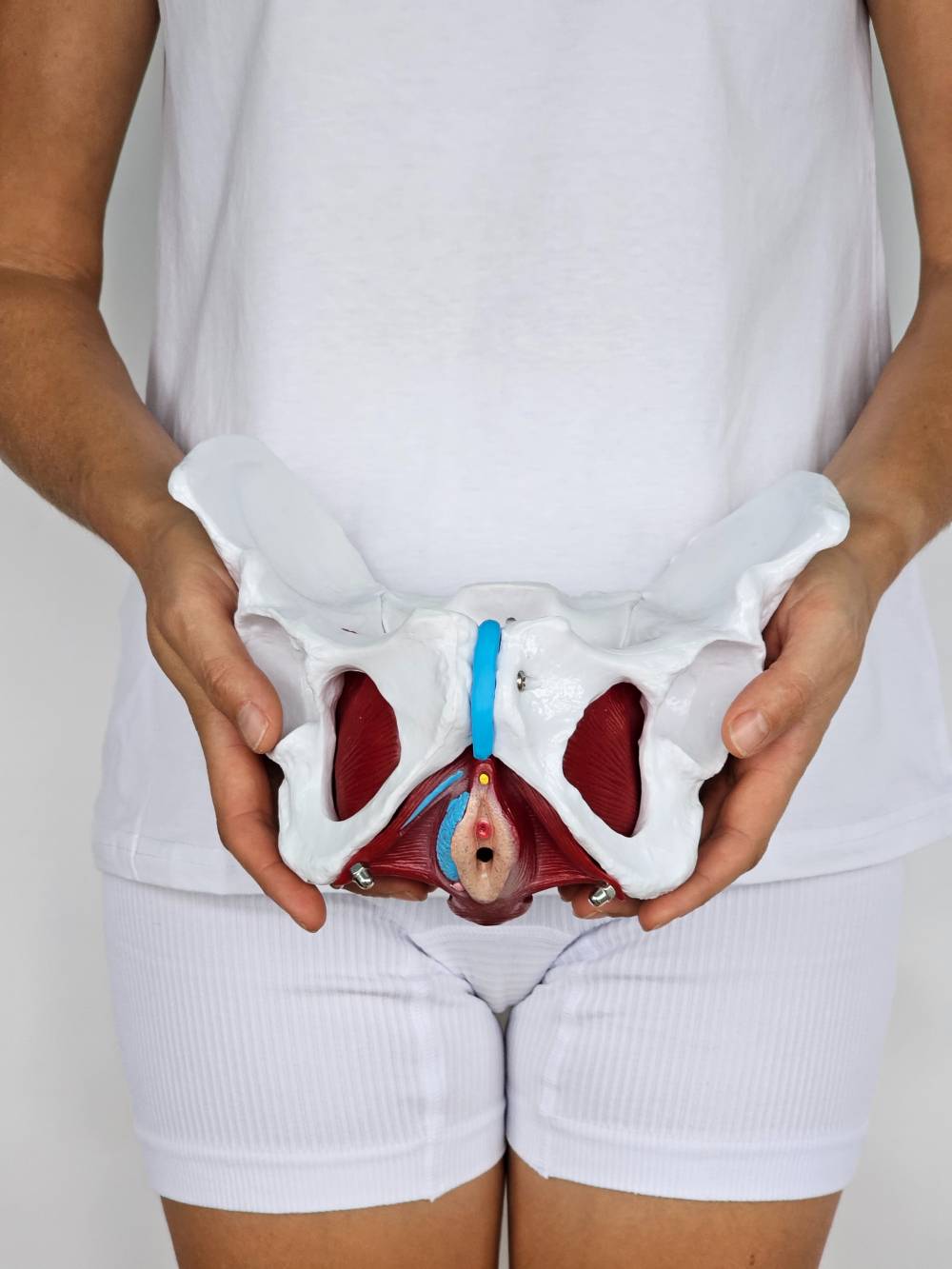
You Should Not Have to Plan Your Day Around the Nearest Bathroom.
Skipping the trampoline park with your kids. Wearing black to every workout. Turning down the second glass of water because you already know how the drive home goes. None of that is vanity, and none of it is something you should have to quietly absorb. It is a muscle problem, and muscle problems have treatments.
Talk to a Provider Who ListensA real person at our Greeley front desk answers. No phone tree, no directory.
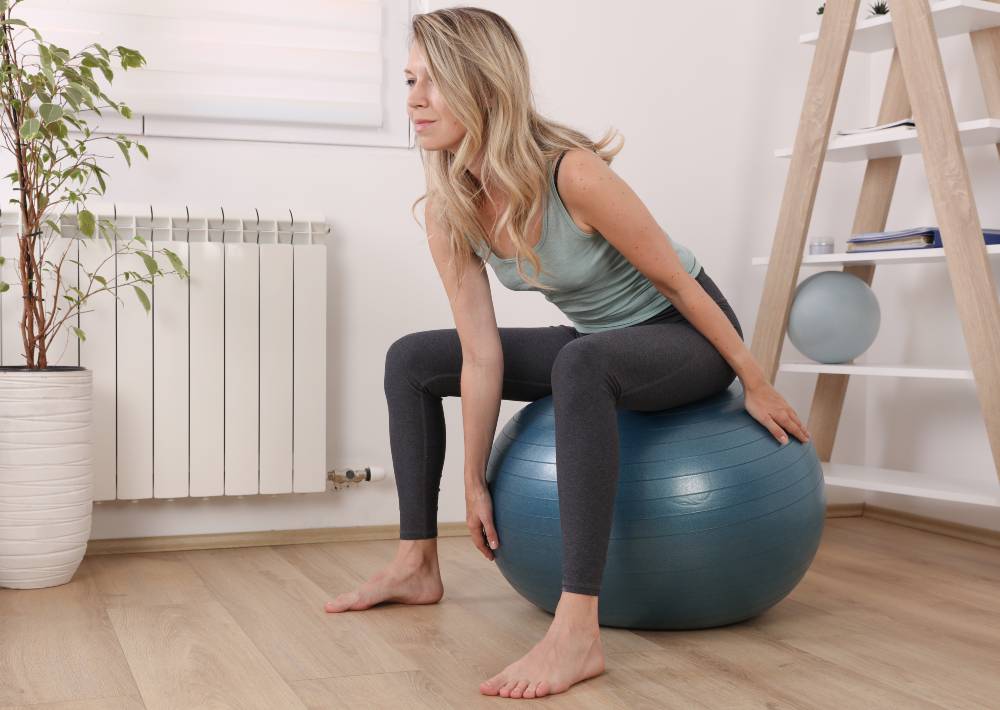
Pelvic floor therapy after pregnancy and childbirth
Pregnancy loads the pelvic floor for nine months whether you deliver vaginally or by cesarean. The weight alone stretches the muscles, hormones loosen connective tissue, and delivery can add direct injury on top of that. The six week postpartum visit clears you for activity. It does not confirm that your pelvic floor recovered, and for a lot of women it has not.
Vaginal delivery. Stretching and tearing can leave the muscles weak, poorly coordinated, or slow to activate. Leaking during a workout months later is a common sign that the muscles are not firing the way they should.
Cesarean delivery. A C-section does not protect the pelvic floor from the months of pregnancy that came before it, and abdominal scar tissue can change how your core and pelvic floor work together. Postpartum pelvic floor therapy matters after a C-section too.
Diastasis recti. When the abdominal muscles separate during pregnancy, the core and pelvic floor lose the pressure system they normally share. Strengthening one without addressing the other usually stalls out.
There is no window that closes. We treat women six months postpartum and women 25 years postpartum, and both groups get results. If you are also thinking about birth control or a well woman visit, our Fort Collins women’s clinic handles all of it in one place.
Menopause, hormones, and your pelvic floor
Estrogen keeps the tissues of the vagina, urethra, and bladder thick, elastic, and well supplied with blood. As levels drop through perimenopause and menopause, those tissues thin and lose elasticity, and the muscles supporting them lose strength. That combination is why bladder symptoms so often appear or worsen in your forties and fifties even if pregnancy was decades ago.
This is also why treating the pelvic floor in isolation sometimes underperforms. If low estrogen is driving tissue changes, muscle work alone is fighting uphill. Because we provide hormone therapy in Fort Collins and pelvic floor therapy in the same practice, we can look at both and decide whether one or both belong in your plan.
Vaginal dryness, painful intimacy, and recurrent urinary tract infections often travel with these changes. If those are part of your picture, vaginal rejuvenation and Forma V are worth discussing at your consultation.


A note from Sheree
Sheree Montoya, FNP-C
I have lost count of the number of women who have told me about their leaking while apologizing for bringing it up. They laugh, they wave it off, and then somewhere in the middle of the sentence their voice goes. That moment is the reason this service exists at my clinic.
I am a mother. I know what pregnancy asks of a body, and I know how easily women are told that what came after is simply the deal now. It is not the deal. A weakened pelvic floor is a treatable medical condition, and treating it gives women back things that are hard to put a number on: workouts, sleep, intimacy, the ability to sneeze in public without doing math first.
This is a women-owned practice, and I put real money into the equipment to do this properly rather than referring it out and hoping for the best. If you have been sitting on this for years, you are in good company, and you are welcome here.
A Pelvic Floor Does Not Quietly Repair Itself.
Muscles that go untrained keep losing strength. The women who tell us they wish they had come in sooner are almost always describing the same arc: a small leak they worked around, then a bigger one, then pads, then giving up things they used to enjoy. Every year of waiting is a year the muscle gets weaker and the fix takes longer.
Book a Pelvic Floor ConsultationA real person at our Greeley front desk answers. No phone tree, no directory.

How V-Tone pelvic floor therapy works
V-Tone is an FDA-cleared system that uses electrical muscle stimulation to contract the pelvic floor muscles directly. The stimulation triggers the same contraction a kegel produces, but far more of them, at a consistent intensity, reaching muscles most women cannot isolate on their own.
Why this beats doing kegels at home. Studies of self-directed kegels consistently find that a large share of women perform them incorrectly, often bearing down instead of lifting. V-Tone removes the guesswork. The device produces the contraction whether or not you have found the right muscle yet, and that repetition is what builds strength.
What the treatment is like. V-Tone is non-surgical and non-invasive, with no recovery time. You come in, complete the session, and go back to your day. There is no anesthesia, no incisions, and nothing to plan around.
What results look like. Many patients begin noticing improvement within three to six sessions, and a full course is typically a short series scheduled a week apart. Results depend on how long symptoms have been present and how severe they are, which is exactly what your consultation is for.
Why the setting matters. Pelvic symptoms sometimes point to something other than muscle weakness, including infection, prolapse that needs a different intervention, or a neurological cause. Because V-Tone here is delivered inside a full medical practice rather than a standalone spa, a provider evaluates you before treatment starts, and your primary care and women’s health records sit in the same chart.
Why Fort Collins women drive to NOCO Healthcare
Fort Collins has no shortage of clinics. The women who drive to Greeley for pelvic floor therapy tend to do it for a handful of specific reasons.
A women-owned practice. NOCO Healthcare was founded and is run by Sheree Montoya, FNP-C. Pelvic health is not a line item added to fill a schedule here; it is a service the owner invested in deliberately.
Appointments that are long enough. Pelvic symptoms take more than a seven minute slot to describe, particularly the ones women have spent years not saying out loud.
Everything in one chart. Pelvic floor therapy, hormone therapy, well woman care, and primary care all live in the same practice, so nobody is guessing at your history.
More than 380 Google reviews at a 4.8 star average. You can read them yourself rather than taking our word for it.
Straight answers about cost. Coverage for pelvic floor treatment varies by plan. We verify your benefits before you commit, quote self-pay pricing up front, and offer payment plans through Cherry if you want to spread it out.
Starting Pelvic Floor Therapy Takes Three Steps
Call or Book Online
Tell us what you are experiencing. You will not be asked to explain it to three different people.
Get Evaluated
A provider examines you, reviews your history, and confirms whether pelvic floor therapy is the right treatment.
Start Your Plan
Begin your V-Tone series with a schedule that fits the drive from Fort Collins.
A real person at our Greeley front desk answers. No phone tree, no directory.
Related Women's Health Pages
- Fort Collins women's clinic
- Pelvic floor therapy in Greeley
- Urinary incontinence treatment
- V-Tone pelvic floor technology
- Vaginal rejuvenation
- Forma V
- Hormone therapy in Fort Collins
- Birth control clinic
- Primary care in Fort Collins
- Accepted insurance and payment options
A real person at our Greeley front desk answers. No phone tree, no directory.
Pelvic floor therapy in Fort Collins: frequently asked questions
What is pelvic floor therapy?
Pelvic floor therapy is treatment that retrains and strengthens the muscles supporting your bladder, uterus, and bowel. At NOCO Healthcare it is delivered with the V-Tone system, which uses electrical muscle stimulation to contract those muscles directly, paired with bladder coaching and a plan built around your symptoms.
Where can I get pelvic floor therapy near Fort Collins?
Pelvic floor therapy near Fort Collins is available at NOCO Healthcare, about a 30 minute drive away at 1130 38th Ave STE A in Greeley. We treat women from Fort Collins, Timnath, Wellington, Loveland, and Windsor, Monday through Friday, 8 a.m. to 6 p.m. Call (970) 888-0399 to schedule.
How much does pelvic floor therapy cost in Fort Collins?
Pelvic floor therapy cost depends on whether your insurance covers it and how many sessions your plan calls for. We verify your benefits before you commit and quote self-pay pricing up front, with no surprise billing. Payment plans through Cherry are available if you would rather spread the cost out.
Does insurance cover pelvic floor therapy?
Insurance coverage for pelvic floor therapy varies by plan and by the diagnosis on file. Some plans cover treatment for documented urinary incontinence; others treat it as elective. NOCO Healthcare accepts most major plans, Medicare, and Medicaid, and our staff will check your specific benefits before your first session.
Is pelvic floor therapy painful?
Pelvic floor therapy with V-Tone is not painful. The stimulation produces a muscle contraction that most patients describe as a firm tightening sensation rather than discomfort. There is no anesthesia and no recovery time, and you can tell your provider to adjust the intensity at any point.
How many pelvic floor therapy sessions will I need?
Most pelvic floor therapy patients begin noticing improvement within three to six sessions, with a full course scheduled about a week apart. The exact number depends on how long your symptoms have been present and how severe they are. Your provider maps out the series at your consultation.
Can I get pelvic floor therapy after having a baby?
Postpartum pelvic floor therapy is one of the most common reasons women come to us, after both vaginal and cesarean deliveries. There is no deadline. We treat women a few months postpartum and women decades postpartum, and both see results. Wait until you are cleared from your six week check, then come in.
Is pelvic floor therapy the same as pelvic floor physical therapy?
Pelvic floor therapy and hands-on pelvic floor physical therapy overlap but are not identical. Muscle stimulation like V-Tone targets weakness and poor tone. A licensed pelvic floor physical therapist is often the better fit for pelvic pain, muscles that are too tight, or scar tissue needing manual release. If your evaluation points that way, we will tell you and help you find the right provider.
Can pelvic floor therapy stop bladder leaks without surgery?
Pelvic floor therapy can reduce or resolve bladder leaks without surgery for many women, particularly stress incontinence, the kind that shows up with a sneeze, cough, laugh, or workout. V-Tone is FDA cleared and non-surgical. Severe prolapse or structural problems sometimes still require a surgical referral, which your evaluation will identify.
Do kegel exercises work as well as pelvic floor therapy?
Kegel exercises help when they are done correctly, but a large share of women perform them wrong, often bearing down instead of lifting. Pelvic floor therapy with V-Tone removes that problem by producing the contraction for you, at a consistent intensity, far more times per session than you would manage on your own.
Sneeze without doing math first.
Pelvic floor therapy at NOCO Healthcare is non-surgical, evaluated by a provider before it starts, and worth the drive from Fort Collins. Bring the symptoms you have been apologizing for. We have heard them all, and we can usually do something about them.
Call (970) 888-0399 Book onlinePelvic floor problems in an active Fort Collins life
Fort Collins women tend to notice pelvic floor trouble on the trail first: a leak on the downhill at Horsetooth, a cut-short run on Spring Creek, a pool day at EPIC that stops being fun. Jumping, running, and lifting load the pelvic floor, and so do pregnancy, menopause, and the dryness that comes with low humidity and hormonal change.
V-Tone treatment is non-surgical and takes about 15 minutes once a week for six weeks, with no downtime, so most patients keep their training schedule. We also look at the bigger picture, including hormone levels when symptoms started with perimenopause, with labs drawn in the office.
Our women-owned clinic is in Greeley, about 35 minutes from Fort Collins. Prescriptions, when needed, go to your usual Fort Collins pharmacy.
Patient approved
What Our Patients Say


Experience Better Healthcare Now
Same Day Appointments are Available